Understood Betsy: Summary and English Level
KeepReap Editorial
Understood Betsy follows a frightened nine-year-old who discovers that being cared for can include being trusted to do things herself. Sent from her anxious city relatives to a Vermont farm, Elizabeth Ann encounters horses, butter-making, a small school, and adults who expect her to think. Dorothy Canfield Fisher builds the story around ordinary tasks whose emotional stakes feel enormous to the child attempting them.
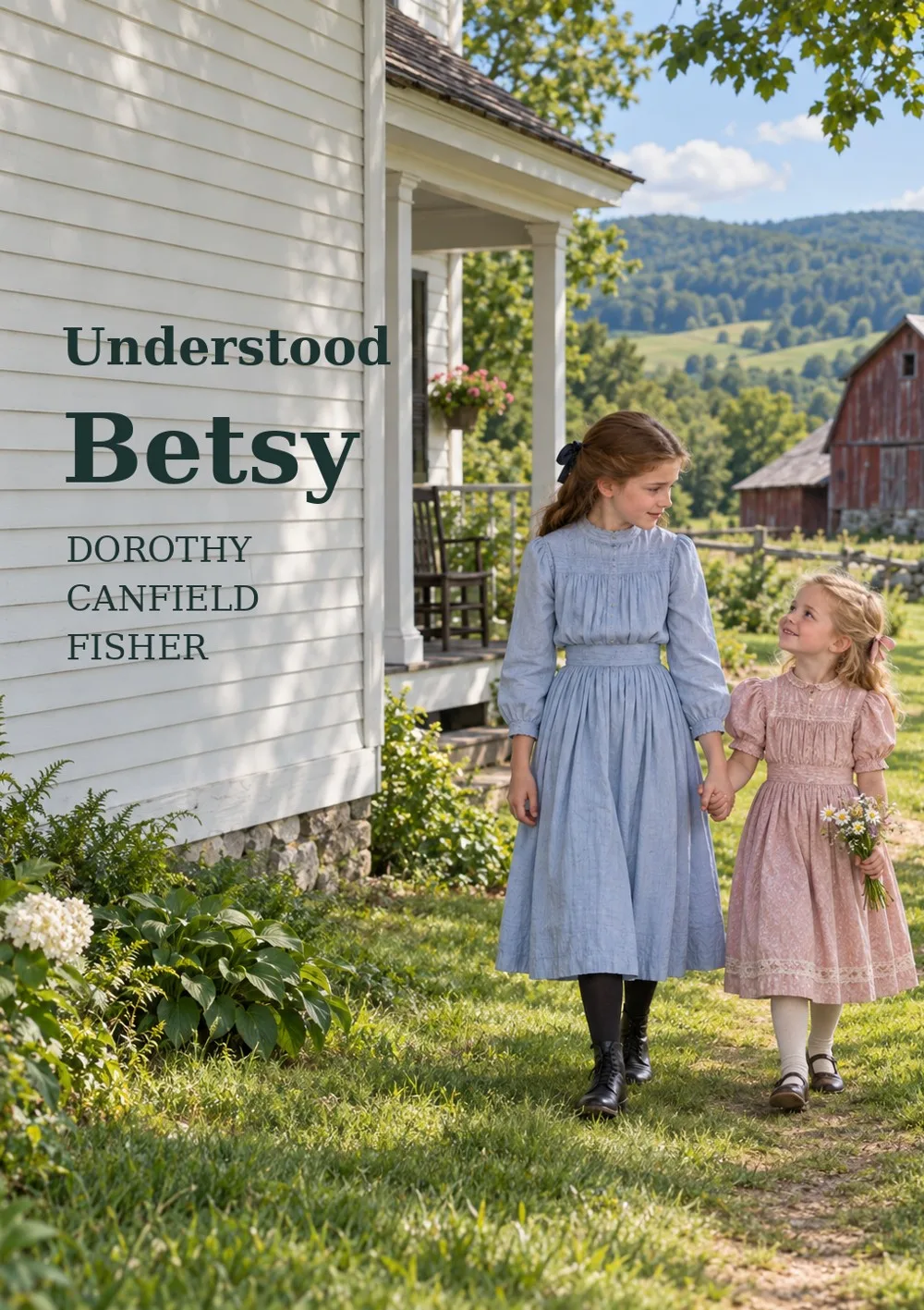
Understood Betsy at a glance
| Author | Dorothy Canfield Fisher |
|---|---|
| First book publication | 1917 (book publication) |
| Genre | Children’s novel; realistic coming-of-age fiction |
| Length | Approximately 47,000 words in 11 chapters |
| English level (editorial estimate) | B1–B2 |
Spoiler-free summary
Elizabeth Ann has grown up with Great-aunt Harriet and Aunt Frances, whose affection surrounds her with constant attention. They discuss her fears, manage her activities, and treat her as exceptionally delicate. When illness disrupts this household, she must stay with the Putneys, relatives on a farm in Vermont whom she has been taught to regard as cold and unsympathetic.
Her arrival seems to confirm every warning. Uncle Henry hands her the horses’ reins rather than asking about her feelings. Cousin Ann expects her to dress herself and find her way to school. Aunt Abigail offers food, practical work, and a kitten that needs looking after. These unfamiliar responses gradually interrupt the habits through which Elizabeth Ann understands herself.
The story follows a changing school year through household tasks, friendships, and countryside experiences. A classroom where pupils join different groups for different subjects unsettles her assumptions about ability. Younger Molly brings responsibilities that require attention beyond her own anxieties. The suspense comes from whether Betsy can act when reassurance is unavailable, and whether the adults around her can understand what she actually needs. The novel’s central movement is inward, but Fisher gives it visible form through decisions, hands, tools, and everyday work.
Why it is worth reading
Fisher makes development observable. When Uncle Henry gives Betsy the reins, she discovers that choosing the direction she wants matters more than nervously remembering left and right. The scene turns a small practical problem into a convincing change in how she thinks. It also shows the uncle’s method: he creates room for action without announcing an educational lesson.
Another strength is the gap between adult intentions and their effects. Aunt Frances genuinely loves Elizabeth Ann, yet their repeated conversations about distress can intensify it. The Putneys initially appear less affectionate because they speak and behave differently. Readers must judge care through consequences rather than comforting vocabulary alone.
The school episodes make the same argument through a different setting. Betsy’s reading and arithmetic need different kinds of work, and the teacher treats that difference as ordinary. Fisher’s own involvement with Montessori education provides useful context for this emphasis on practical activity and individual capacity, although the story presents its ideas through characters rather than a formal teaching manual.
Main characters
Elizabeth Ann, increasingly called Betsy, is observant and capable but accustomed to receiving her picture of herself from adults. Her changing name accompanies a widening range of actions and relationships; it does not instantly remove her uncertainty.
Aunt Frances offers devoted, anxious care. She is important because Betsy’s attachment to her is real, making the contrast with farm life emotionally complicated. Great-aunt Harriet reinforces the household’s distrust of the Putneys.
Uncle Henry quietly gives Betsy practical opportunities, including driving the team. Aunt Abigail combines domestic competence with humour, memories, and physical warmth. Cousin Ann is direct and dependable; her calm becomes a model Betsy can draw upon when frightened.
Molly, a younger child, invites Betsy to become a protector herself. Schoolmates Ellen, Ralph, and ’Lias extend the story beyond the family, revealing different abilities and needs within the small rural community.
Themes
Independence grows through participation. Driving horses, helping with butter, and managing ordinary household jobs allow Betsy to discover abilities that constant assistance has concealed. Fisher repeatedly moves from anticipation of disaster to a specific action the child can actually perform. Confidence follows experience rather than arriving through praise alone.
Education is another central theme. Betsy expects a school grade to define her whole ability. Her teacher instead places her according to what she can do in each subject. The contrast exposes the limits of a single label and links learning to attention, practice, and meaningful difficulty.
Care also requires understanding a person’s circumstances. The children’s concern about ’Lias and his clothing develops into questions about the home conditions behind his appearance. Helping someone therefore becomes more complicated than improving how that person looks.
Finally, Betsy’s relationship with Molly shifts her attention outward. Remembering what fear and rejection feel like helps her notice another child’s needs. The farm’s value lies partly in giving her a place within reciprocal relationships, where receiving care and contributing to others can happen together.
What it feels like to read
The novel moves at the pace of discovery rather than a chase. Butter-making, classroom conversation, apples, and family memories receive substantial space because they change what Betsy notices. Readers who enjoy the texture of daily life will find this rhythm easier to enter than readers waiting for a new adventure on every page.
The narrator frequently addresses the reader, asks questions, and comments on adults with amused scepticism. Even the long title of the conversation chapter jokes about whether you want to follow a domestic discussion. That voice can feel like an older storyteller pausing beside you.
There is real tension beneath the comfortable setting. Fear, school failure, poverty, and responsibility interrupt the domestic warmth. These episodes keep Betsy’s progress from becoming merely a sequence of pleasant farm activities, while the humour prevents every mistake from turning into a solemn moral.
How hard the English is
B1–B2 is a reasonable editorial estimate for Understood Betsy, not an official CEFR classification. A supported B1 reader can often follow the main action because tasks, feelings, and conversations have clear physical contexts. B2 readers are better placed to follow the narrator’s qualifications and the irony surrounding anxious adults without frequent help.
Vocabulary mixes familiar family and school language with older rural terms. Reins, a churn, a surrey, and a sap-house may require explanation. Understanding the object in a scene is usually more useful than memorising every unfamiliar word immediately.
Sentence structure is less consistently simple than the child protagonist might suggest. Fisher uses long sentences, interruptions, parentheses, and chains of explanation. When a passage becomes difficult, identify who is acting and what changes before returning to the commentary.
Dialogue is lively but sometimes uses nonstandard spellings and contractions to represent regional speech. Uncle Henry’s expressions can be harder to decode than Betsy’s own words. Cultural context also matters: a one-room school, household food production, and a county fair may need brief background notes.
At approximately 47,000 words across eleven chapters, the book requires reading stamina. Following the plot does not guarantee independent understanding of every humorous aside or implied criticism. Reading one chapter over several sessions, with a short vocabulary list, can preserve momentum.
Who should read it
Understood Betsy suits readers interested in childhood confidence, family relationships, and the practical texture of rural life. It is especially rewarding if you like stories where a new skill or a change in someone’s response carries more weight than a dramatic revelation. The reins episode and the flexible classroom offer concrete material for conversations about how adults help children learn.
English learners around B1–B2 can use it as a sustained reading project, with more support at the lower end. A dictionary and explanations of farm objects will be useful. Readers seeking rapid action or very short, contemporary sentences may find the narrator’s digressions slow.
Adults can read the anxious affection of Aunt Frances alongside the Putneys’ expectations without treating either household as a simple collection of heroes or villains.
Frequently asked questions
What is Understood Betsy about?
Understood Betsy is about a nine-year-old orphan whose move to relatives on a Vermont farm changes her understanding of herself. Through household work, school, and friendships, she discovers abilities that overprotective care has hidden. Its central concern is how affection, trust, and responsibility shape a child’s confidence.
Is Understood Betsy easy to read in English?
Understood Betsy is moderately accessible, with an editorial estimate of B1–B2. Its concrete situations help learners follow events, but long narrative sentences, regional dialogue, and older farm vocabulary create challenges. B1 readers will usually benefit from explanations and dictionary support; B2 readers can more readily appreciate the narrator’s humour.
Can adults enjoy Understood Betsy?
Adults can enjoy Understood Betsy for its examination of caregiving and education. Aunt Frances’s loving anxiety and the Putneys’ practical expectations invite readers to consider how good intentions affect children. The school scenes also challenge the idea that one grade or label can describe a learner’s whole ability.