The Lost Prince: Summary and English Level
KeepReap Editorial
In The Lost Prince, a boy’s ability to keep quiet matters more than his ability to fight. Twelve-year-old Marco Loristan lives in shabby London lodgings, but his father’s mysterious work connects their poverty to the fate of a distant kingdom. Frances Hodgson Burnett turns street games, memorised faces, and apparently ordinary conversations into the machinery of a secret adventure built around trust.
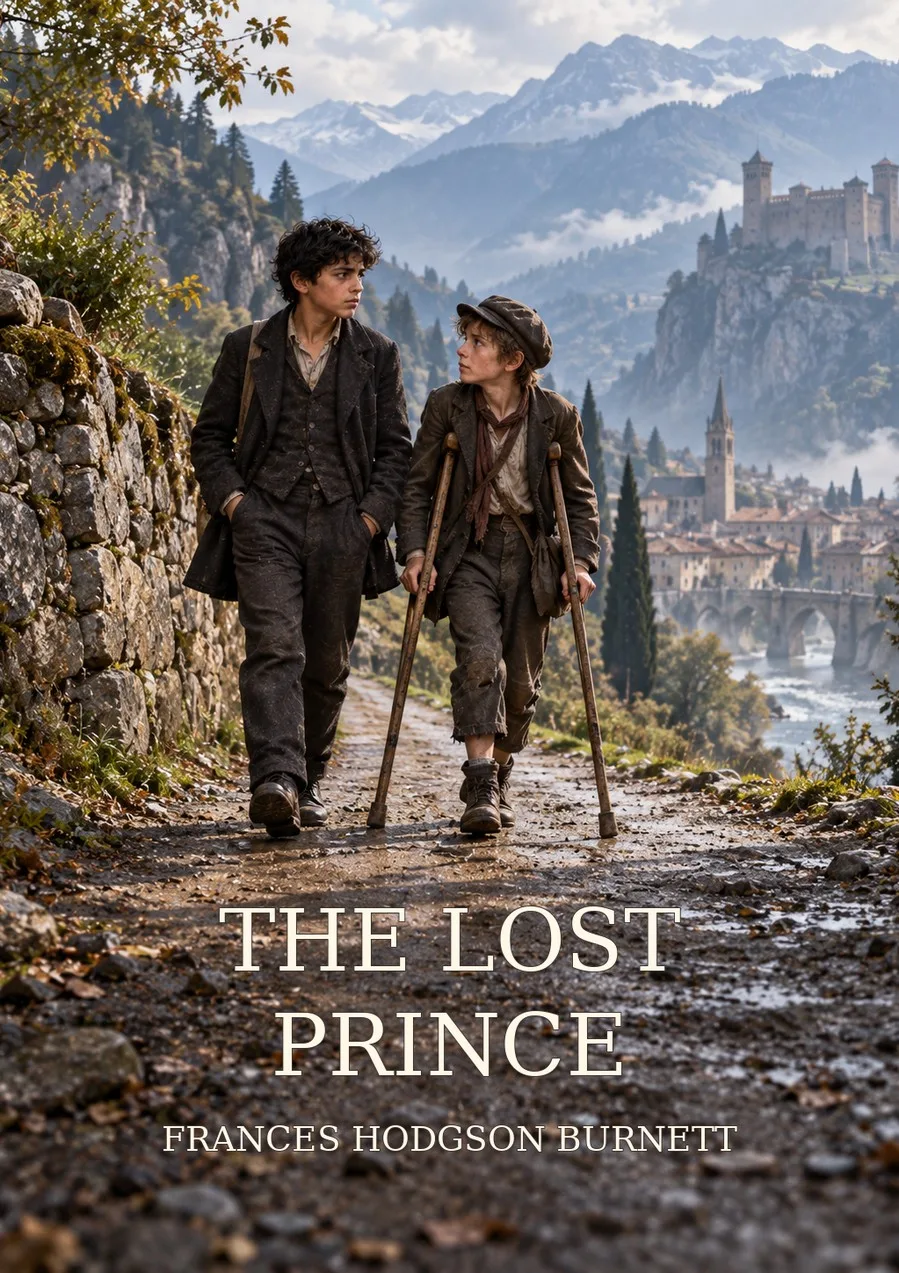
The Lost Prince at a glance
| author | Frances Hodgson Burnett |
|---|---|
| first published | 1915 |
| genre | Children’s adventure; royal and political mystery |
| length | 31 chapters; approximately 99,000 words |
| english level | B2 |
What is The Lost Prince about?
Marco Loristan has spent his childhood moving between European cities with his father, Stefan, and their faithful servant, Lazarus. He speaks several languages and knows how to observe unfamiliar surroundings, but he must conceal everything that makes his life unusual. His father teaches him that careless words can endanger people working for Samavia, the troubled country they regard as home.
In London, Marco meets a street boy nicknamed The Rat, who uses crutches and commands a makeshift squad of boys. The Rat’s military games reveal an inventive mind and a hunger for responsibility. Marco introduces him to stories of Samavia, including the legend of a prince who disappeared centuries earlier. What begins as shared imaginative play gradually approaches the adult world of concealed loyalties and political danger.
The boys become involved in a journey across Europe, where recognising the right person and delivering a short message can matter enormously. Their ordinary appearance offers protection, but strangers may be more observant than they expect. The novel combines the mystery surrounding Marco’s family with the practical suspense of carrying out instructions while knowing only part of the larger plan.
Why read The Lost Prince?
Burnett makes observation an active form of adventure. Marco’s memory for faces, knowledge of languages, and habit of answering carefully are skills established before the journey begins. Later encounters therefore feel like tests of training rather than fortunate accidents. A conversation, a glance, or a decision to remain silent can carry the tension usually supplied by a chase.
The second attraction is the partnership between Marco and The Rat. Their different backgrounds produce different kinds of expertise: Marco understands European places and cultivated manners, while The Rat knows street danger and thinks inventively about routes and disguises. The squad’s pretend drill becomes a way to recognise abilities adults might otherwise dismiss.
Loristan’s treatment of The Rat also gives the adventure emotional weight. He offers food, rest, and serious attention before asking the boy to prove his usefulness. The resulting loyalty has a recognisable human beginning, even when the surrounding royal mystery grows increasingly grand.
Main characters
Marco Loristan is a tall, dark-haired twelve-year-old trained to be discreet, observant, and dependable. His love for his father shapes both his ambitions and his willingness to obey instructions whose purpose he cannot yet fully understand.
The Rat is a resourceful London boy with a physical disability, a sharp tongue, and an intense interest in military strategy. His crutches affect the practical details of travel, but his judgement and imagination make him an active partner rather than someone Marco merely protects.
Stefan Loristan is Marco’s father, a dignified Samavian patriot whose authority contrasts with his threadbare clothing. He teaches through conversation, example, and carefully chosen responsibilities. Lazarus, their soldierly servant, maintains order and guards the household’s secrets. His formal devotion helps Marco sense that their apparently insignificant lodgings belong to a much larger story.
Themes and ideas
Silence is the novel’s most persistent discipline. Marco repeatedly has to distinguish what he knows from what he is permitted to say. His father’s instructions make discretion a form of service, while encounters with inquisitive strangers show how politeness can become a tool for extracting information.
Dignity is another central concern. Loristan’s worn clothes do not diminish his bearing, and The Rat’s poverty does not prevent him from possessing strategic intelligence. The contrast between appearance and ability supports the boys’ mission: people who look unimportant may be doing consequential work.
Belonging develops through shared responsibility. Marco’s attachment to a country he has never seen differs from The Rat’s initial connection to London streets and his squad. Their cooperation gives that difference a practical shape.
The book also links steadiness of thought with effective action. Loristan’s teaching asks the boys to control panic and recover their attention. These passages express a spiritual confidence that readers can examine separately from the immediate demands of the adventure.
What is the reading experience like?
The Lost Prince begins slowly, with descriptions of London poverty, Marco’s upbringing, and Samavian history. Burnett wants the reader to understand why a boy might treat an ordinary conversation like a military assignment. The early squad scenes add rough humour and the pleasure of a new friendship.
Once the journey develops, the rhythm becomes more episodic. The boys search, wait, recognise someone, and attempt a discreet approach. Because they cannot openly explain their purpose, a small obstruction can create substantial suspense.
The tone remains earnest. Loristan is presented with extraordinary admiration, and the boys’ language of comradeship often sounds ceremonial. Readers who enjoy sincere loyalty and carefully built anticipation may find this compelling; those seeking constant action or a sceptical narrator may find the repeated declarations and reflective pauses slower.
English difficulty and reading level
B2 is a practical editorial estimate for independently reading the original English of The Lost Prince. A confident B1 learner may follow the main events with illustrations, a dictionary, and occasional explanation, but understanding the full narrative voice requires more than recognising the basic action.
Vocabulary includes military and political words, such as allegiance, regiment, exile, and aide-de-camp, alongside older terms for lodgings, servants, and city life. Samavian personal names and rival family names also require attention even though the kingdom is fictional.
Sentence structure is uneven. Many exchanges are short and direct, while descriptive paragraphs contain long sentences with several clauses. Marco’s withheld knowledge makes it useful to ask who knows what, rather than translating every line separately.
Dialogue distinguishes social backgrounds. The Rat and the squad use colloquial grammar and contractions that differ from Loristan’s controlled, formal speech. Following their meaning is easier than noticing every implication of class and register.
Historical context includes royal courts, diplomatic networks, and expectations of deference. Readers need a working understanding of these conventions, not a detailed history of real European politics. Finally, the book’s approximately 99,000 words demand stamina. Keeping a brief list of characters, places, and instructions can prevent the central mission from getting lost during descriptive or philosophical passages.
Who should read The Lost Prince?
The Lost Prince suits readers who enjoy secret messages, disguised importance, and friendships tested by responsibility. Marco and The Rat’s cooperation will appeal especially to anyone who likes adventures won through memory, judgement, and patience as well as courage.
For English learners, it is a substantial project rather than a quick first classic. B2 readers can approach it independently; B1 readers will benefit from support and manageable reading sessions. The squad’s dialogue offers useful practice in distinguishing informal speech from formal narration.
Adults may appreciate the contrast between the boys’ vulnerability and the duties entrusted to them. Readers uncomfortable with idealised royal authority or strongly reverent portrayals of leadership should expect those assumptions to remain part of the story. It offers less domestic intimacy than Burnett’s garden and household novels.
Frequently asked questions
Is The Lost Prince difficult to read in English?
The original English of The Lost Prince is best approached at B2 as an editorial estimate. Its main mission is fairly clear, but long descriptive sentences, military vocabulary, and The Rat’s colloquial speech add difficulty. B1 learners can follow much of the action with support, while missing some differences in tone and social register.
Is Samavia in The Lost Prince a real country?
Samavia is a fictional European kingdom in The Lost Prince. Burnett gives it a history of rival ruling families, civil conflict, and a vanished prince, then connects its hidden supporters to recognisable European cities. Treat its royal history as part of the novel’s invented setting rather than as an account of an actual country.
Can adults enjoy The Lost Prince?
Adults can enjoy The Lost Prince for its friendship, secret-messenger suspense, and interest in how people judge appearances. The Rat’s movement from street survival toward trusted responsibility is particularly engaging. Readers should also expect an earnest children’s adventure that idealises its central father figure and spends considerable time on loyalty, self-control, and spiritual confidence.
References
Project Gutenberg — The complete text of The Lost Prince
HathiTrust — The Lost Prince, 1915 catalogue record
Simon & Schuster — The Lost Prince: book and author information