The Little Lame Prince: Summary and English Level
KeepReap Editorial
A boy can see almost nothing beyond the window of his tower until an apparently shabby cloak opens the world to him. The Little Lame Prince follows Prince Dolor through that change in perspective. Dinah Maria Mulock Craik combines a fairy tale about flight with a more searching story about loneliness, power, and learning to notice lives very different from one's own.
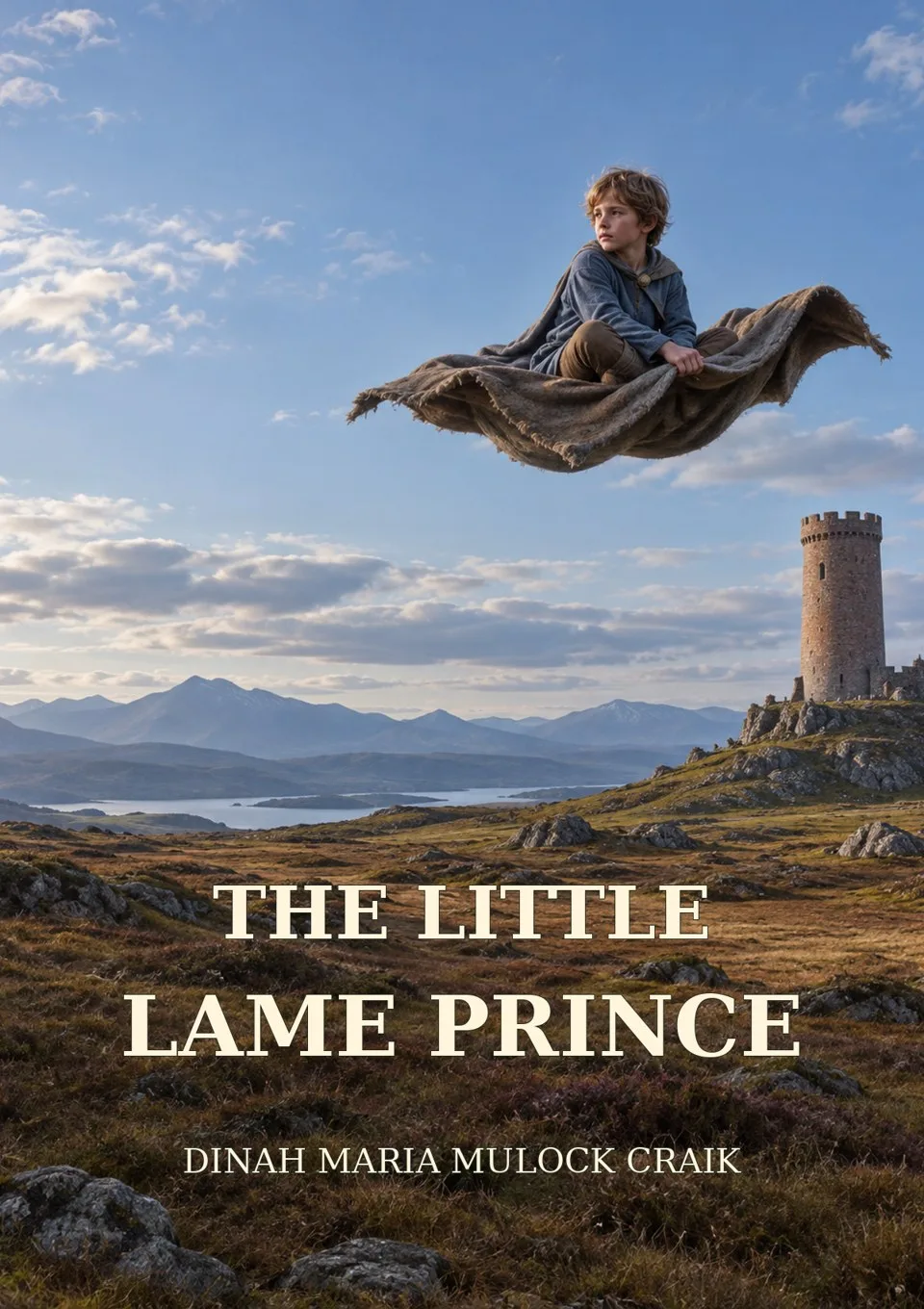
The Little Lame Prince at a glance
| Author | Dinah Maria Mulock Craik |
|---|---|
| First publication | 1875 |
| Genre | Literary fairy tale and parable |
| Length | Ten chapters in the title story |
| English level | B2 (editorial estimate) |
Spoiler-free summary
Prince Dolor begins life surrounded by royal ceremony. Everyone admires the new baby, yet the adults responsible for him are much less attentive than their splendid clothes and formal speeches suggest. An accident at his christening leaves him unable to walk. After losing his parents, he becomes dependent on an uncle whose concern for the kingdom conveniently serves his own ambitions.
Dolor grows up in an isolated round tower, with a nurse who answers his questions impatiently. His books offer glimpses of life, but they cannot replace conversation, affection, or experience. The arrival of a small godmother dressed in gray changes what he can imagine. She brings a travelling cloak that looks unimpressive but gives him extraordinary freedom in the air.
The journeys widen gradually, from unfamiliar landscapes and living creatures to people, streets, and the complicated world of royal government. Dolor's curiosity brings pleasure, but it also introduces envy, disappointment, and difficult questions. The story's central movement is therefore more than an escape from a tower: it is a child's education in seeing beyond himself. Craik keeps the magic closely connected to ordinary needs, including companionship, understanding, and the wish to matter to other people.
Why it is worth reading
The travelling cloak makes a familiar fairy-tale promise unexpectedly complicated. Flight gives Dolor a view of movement and freedom, but seeing others run and play also sharpens his awareness of what he cannot do. A magical gift can increase his knowledge without making every feeling comfortable. That tension gives the adventures an emotional weight beyond their fantastic premise.
Craik also changes the scale of what counts as discovery. An oak leaf and a caterpillar become remarkable because Dolor has never encountered them. Readers are invited to look again at things they would normally overlook. The wonder comes from attention rather than from a succession of extravagant creatures.
A third pleasure lies in the narrator's dry treatment of the court. Courtiers congratulate themselves, conceal awkward truths, and mistake an impressive appearance for competence. Their language of public duty contrasts with their private interests. The prince's gradual education and the adults' confident foolishness give readers two different ways to understand the same kingdom.
Main characters
Prince Dolor is curious, observant, and hungry for affection. He is also capable of envy and frustration; his difficulty is not presented simply as an occasion for other people to admire his patience. His limited experience makes an ordinary tree or a passing boy intensely interesting.
The gray godmother offers warmth and practical guidance. Her travelling cloak expands his possibilities, while her conversations challenge him to use those possibilities thoughtfully. She does not behave like a magician who instantly removes every obstacle.
The uncle, first the Prince Regent, uses Dolor's dependence to justify his own authority. He represents the danger of confusing someone's vulnerability with an inability to think or contribute.
The tower nurse is Dolor's daily companion, but she is frequently irritable and secretive. Their relationship shows how company can still leave a child lonely. Birds, including a magpie, later bring different forms of contact with the world beyond his room.
Themes
Seeing and understanding are different achievements in The Little Lame Prince. The cloak allows Dolor to travel above landscapes and cities, but he must learn what the things he sees mean for the people living below. His expanding view connects imagination with responsibility: an interesting spectacle may also contain suffering that deserves attention.
The story repeatedly questions appearances. A shabby bundle proves more useful than royal magnificence, while an apparently capable uncle treats a dependent child as an inconvenience. Dolor's bodily limitations and his developing judgment expose the weakness of measuring worth by movement, display, or rank alone.
Loneliness gives these contrasts their force. The tower provides shelter and lessons but little affection, and Dolor's wish for someone to care about him is as urgent as his wish to travel.
At the same time, the book carries Victorian assumptions about disability. Its narrator often speaks through pity and moral instruction. Readers can appreciate Dolor's intelligence while questioning that vocabulary and the tendency to connect personal suffering with moral growth.
What it feels like to read
The opening moves from ceremonial bustle to a much quieter world. Once Dolor is in the tower, conversations, private thoughts, and small discoveries occupy more space than physical action. The first journeys feel expansive because readers have already experienced the narrowness of his room.
The narrator speaks directly to an imagined audience, asks questions, and interrupts the account with comments about children and adults. This creates the feeling of a story being told aloud, although some interruptions also slow the pace.
The tone shifts between tenderness, gentle comedy, and serious unease. Courtly manners provide humour, but parental loss, isolation, and the gap between freedom and exclusion remain emotionally substantial. The cloak brings recurring moments of wonder without turning the book into an uninterrupted sequence of cheerful adventures.
How hard the English is
B2 is a practical editorial estimate for independent reading of The Little Lame Prince, rather than an official language rating. A confident B1 learner may follow much of Dolor's story with illustrations and dictionary support, but understanding the narrator's irony requires more than recognising the main events.
Vocabulary mixes familiar words about rooms, birds, and feelings with historical terms such as regent, courtiers, and levee. The palace scenes therefore demand more lookup than some of the journeys through nature. Older expressions and disability terminology also need to be understood in their historical context.
Sentence structure is the other main challenge. Craik uses long sentences, parenthetical comments, semicolons, and dashes that interrupt one thought with another. Finding the main subject and verb can help when a sentence becomes crowded.
Dialogue is often easier to follow because Dolor asks direct questions and the godmother answers him. Yet formal politeness at court can conceal selfish intentions, so literal meaning does not always explain a speaker's purpose.
The title story's ten chapters make useful stopping points, though it is longer than a brief bedtime tale. Tracking the cloak's journeys helps maintain the thread. Following the action is achievable sooner than appreciating every aside about monarchy, public opinion, or adult behaviour.
Who should read it
The Little Lame Prince suits readers who enjoy thoughtful fairy tales where a magical object changes a character's perspective. Dolor's fascination with leaves, birds, and ordinary movement offers particular appeal if quiet discoveries matter to you as much as dramatic encounters.
Adults can find interest in the court's evasions and the contrast between public respectability and private ambition. Reading aloud also suits the narrator's conversational voice, with room to pause over difficult sentences or discuss why a character says one thing while wanting another.
English learners should expect some historical vocabulary and a reflective pace. Readers seeking rapid action throughout may find the tower episodes slow. Those discussing the book with children may also want to address its language of pity and separate Dolor's personal worth from the limitations other characters assign to him.
Frequently asked questions
What is The Little Lame Prince about?
The Little Lame Prince is about Prince Dolor, a boy unable to walk who grows up isolated in a tower. A fairy godmother gives him a travelling cloak, allowing him to explore from the air. His discoveries raise questions about freedom, loneliness, and how understanding other people's lives changes the way he sees his own.
Is The Little Lame Prince easy to read in English?
The Little Lame Prince is reasonably manageable for many B2 readers, but its original Victorian English is not consistently simple. Long sentences, royal vocabulary, and ironic comments can interrupt comprehension. B1 readers may follow the central action with support, while needing help to interpret courtly politeness and the narrator's observations about adults.
Can adults enjoy The Little Lame Prince?
Adults can enjoy The Little Lame Prince for its treatment of loneliness and its criticism of royal appearances. Dolor's journeys invite readers to distinguish looking at people from understanding them. The narrator also addresses adult habits indirectly, especially the courtiers' wish to avoid unpleasant truths, so the book offers more than a child's magical adventure.