The Enchanted Castle: When Make-Believe Becomes Real
KeepReap Editorial
A girl dresses up as a princess, tells three visitors that her ring makes people invisible, and discovers that she has disappeared. That unsettling step from pretending to happening drives The Enchanted Castle. Published in 1907, E. Nesbit’s novel begins with children inventing an adventure and gradually opens into something stranger: a garden where household rubbish can become company and marble figures have lives of their own.
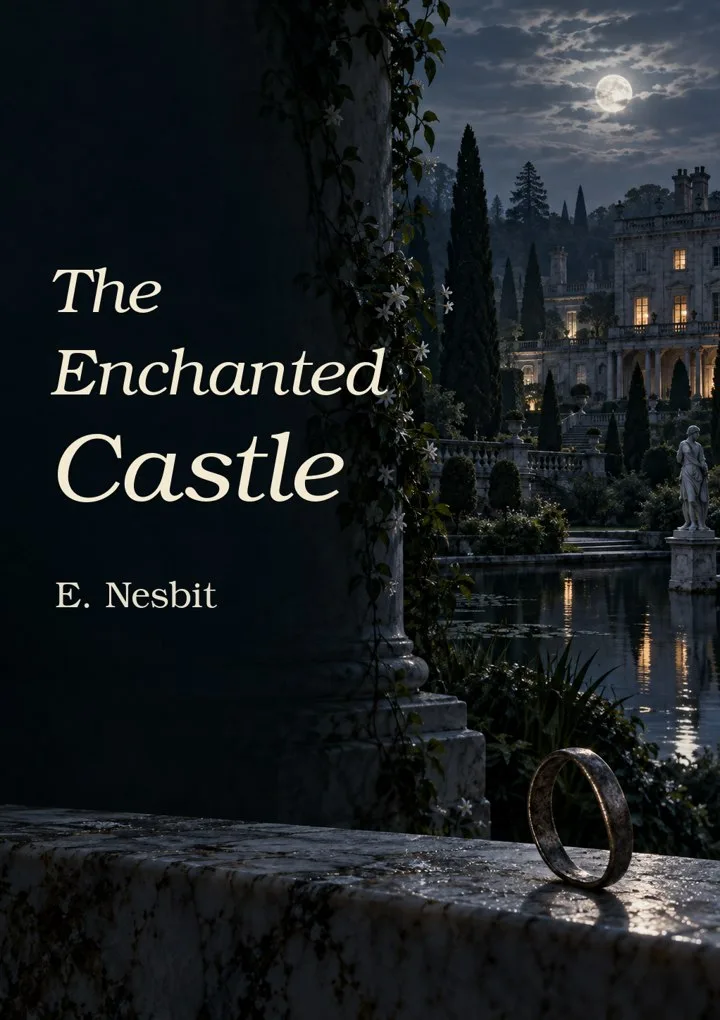
The Enchanted Castle at a glance
| Author | E. Nesbit |
|---|---|
| First published | 1907 |
| Genre | Children’s fantasy; comic and uncanny adventure |
| Length | Approximately 68,000 words; 12 chapters |
| English level | B2–C1 |
A holiday game crosses the line
Gerald, Jimmy and Kathleen cannot go home for the summer because their cousin has measles. Staying at Kathleen’s school under the care of a French governess, they search the countryside for something more interesting than an ordinary holiday. A concealed passage brings them into an elaborate estate with terraces, a lake, classical statues and a maze.
At its centre they find a sleeping princess. She is actually Mabel, the housekeeper’s niece, enjoying a private game of dressing up. Her performance continues into the castle’s treasury, where she attributes magical powers to a ring. When one of those claims comes true, all four children must deal with a problem that acting cannot solve.
Their experiments do not produce a neat instruction manual. Invisibility changes the practical business of meals and supervision; further possibilities emerge as they handle the ring and speak about it. The children improvise explanations for adults while trying to understand what they have set in motion. The estate itself becomes increasingly important, especially after daylight gives way to moonlight. Expect a connected sequence of discoveries and consequences, rather than a quest to defeat a single enemy.
From practical jokes to the moonlit garden
The opening invites the reader into sibling banter and an increasingly elaborate game. Discovering the garden feels like discovering a stage set: terraces, water and statuary appear ready for whatever adventure the children choose. The first genuine transformation changes that comfortable assumption.
The mood then moves unevenly, and deliberately, between practical comedy and unease. A dummy asking about hotels is ridiculous, but its empty face and persistent voice can become disturbing. The children’s explanations may keep a conversation moving even when they cannot make the situation safe.
Moonlit episodes relax the argumentative pace. The water and living statues make room for wonder that cannot be reduced to a clever trick. Readers who enjoy changes of atmosphere will find this movement rewarding; readers expecting every chapter to repeat the same lighthearted wish-and-mishap pattern may be surprised.
An audience made from coats and paper faces
The theatrical audience offers the sharpest example of the book’s imaginative method. The children assemble spectators from coats, gloves, sticks and painted paper faces for a performance of Beauty and the Beast. Those absurd materials remain recognisable even when their owners begin behaving like guests. A homemade joke acquires demands that the performers never planned to meet.
Gerald’s self-dramatisation adds another layer. He describes his own actions as if he were the hero of an adventure book. That borrowed grandeur sits beside ordinary concerns about food, permission and looking convincing. Readers can enjoy his resourcefulness while hearing how much of his courage is a performance.
The garden’s classical figures supply a different pleasure. Marble, water and moonlight create a slower, more spacious kind of enchantment than the frantic management of the dummy audience. Nesbit lets comedy and wonder occupy the same estate. Their contrast makes familiar paths feel capable of changing character without requiring an entirely new fantasy world.
The director, the doubter and their fellow players
Gerald treats social encounters as opportunities to stage-manage events. His opening conversation with Mademoiselle wins permission for an outing through courtesy and calculated sympathy. He can be generous and brave, but he also enjoys directing the story and casting himself as its leading figure.
Jimmy challenges that self-importance. His objections puncture Gerald’s elaborate speeches, and his wishes expose the distance between wanting an outcome and understanding what it entails. Kathleen notices emotional difficulties that the boys can brush aside: when Mabel becomes invisible, she asks them to imagine how frightening it must feel.
Mabel brings knowledge of the estate and an enthusiasm for invention. Her princess performance makes her both a collaborator and the person most immediately caught by its consequences. Mademoiselle belongs to the practical school world at first, though the novel gradually gives the adults concerns of their own. The four children’s friendship develops through shared embarrassment, ingenuity and the need to help one another.
What words can bring into being
Words can commit their speakers to more than they intend. Mabel initially uses the ring as a prop for a story, but her description becomes an event. Later wishes continue that connection between language and consequence. The danger lies partly in assuming that a phrase expresses exactly what its speaker wants.
The Ugly-Wuglies complicate the boundary between a thing and a person. Their coats and paper faces were assembled to fill empty seats; once animated, they ask for respectable accommodation. Gerald must respond to apparent social expectations while knowing that the visitor before him has no ordinary body. Something intended as decoration suddenly requires negotiation.
Knowledge also changes how a place is experienced. Daytime visitors see a grand estate; the children know where hidden passages lead and what may happen after dark. The classical statues turn that difference into an encounter with another order of life. Their presence gives the garden a history and a dignity beyond the children’s games. Enchantment becomes both a responsibility to manage and an experience that exceeds management.
Hearing the joke beneath Gerald’s heroic voice
Gerald’s invented heroic voice shows why following the action is easier than hearing every joke. When he narrates a small task in grand language, the humour depends on recognising the difference between his vocabulary and what he is actually doing. B2 readers can often track the events with support; C1 readers are better placed to enjoy those shifts independently. B2–C1 is an editorial estimate, not an official rating.
Vocabulary ranges from household objects to historical clothing, transport and social roles. Brocade, balustrades and a bailiff belong to different parts of the adventure. Learn recurring words before pursuing every unfamiliar ornament in the treasury.
Sentence structure alternates between short objections and longer narration with asides. Finding the main clause helps when the narrator interrupts an explanation. Dialogue presents period slang, a French speaker’s English and deliberately distorted sounds. In the Ugly-Wuglies’ speech, missing consonants make listening mentally to a phrase more useful than treating each written fragment as a separate word.
Classical names such as Phoebus, Hermes and Psyche add cultural context. Basic identification helps without requiring a detailed mythology course. Finally, roughly sixty-eight thousand words across twelve substantial chapters require sustained attention. Pictures clarify visible events; irony, pronunciation jokes and the narrator’s comparisons still depend on reading the language.
Choosing a fantasy with an uncanny edge
A reader drawn to the unsettling edge of imaginative play has a strong reason to choose this novel. The paper-faced audience offers a stranger experience than a friendly magical companion, while the moonlit garden rewards someone willing to pause over atmosphere. The story keeps its child-centred viewpoint even as adults acquire more complicated emotional lives.
For shared reading, the shifts from comic invention to fear provide useful stopping points for discussing what the children expected and what actually happened. Independent English learners should be ready for a full novel with dated slang and occasional difficult dialogue. A reader wanting only cheerful, predictable magic may prefer a gentler introduction; someone curious about how wishes change the meaning of ordinary objects will find plenty to examine here.
Questions about the ring and its world
Is The Enchanted Castle part of the Five Children and It series?
No, The Enchanted Castle introduces Gerald, Jimmy, Kathleen and Mabel, rather than the siblings of the Psammead books. You can begin it without reading Five Children and It or The Phoenix and the Carpet. Familiarity with Nesbit’s other fantasies may illuminate her interest in troublesome wishes, but this estate and its ring belong to a separate story.
What are the Ugly-Wuglies in The Enchanted Castle?
The Ugly-Wuglies are dummy spectators assembled from household objects, clothes and painted paper faces for the children’s play. Magic makes them behave as living visitors while their makeshift construction remains disturbing. They are not a species of conventional fairy-tale monster: their mixture of ordinary materials and social manners creates the episode’s particular comedy and fear.
Do I need to know Greek mythology to read The Enchanted Castle?
No, detailed knowledge of Greek mythology is unnecessary for following The Enchanted Castle. The children’s encounters establish what the animated statues do within the story. Knowing the basic identities of Phoebus, Hermes and Psyche can enrich those scenes, especially their contrast with everyday school life, but unfamiliar names need not stop the narrative.