The Book of Dragons: Summary and English Level
KeepReap Editorial
A dragon can escape from a picture, demand repairs from a blacksmith, or become a national nuisance small enough to hide in the butter. The Book of Dragons by E. Nesbit brings together eight separate fairy tales in which extraordinary creatures interrupt surprisingly ordinary habits. Children, workers, and princesses must respond while kings, officials, and teachers often misunderstand what is happening. The pleasure lies in that collision between magic and everyday common sense.
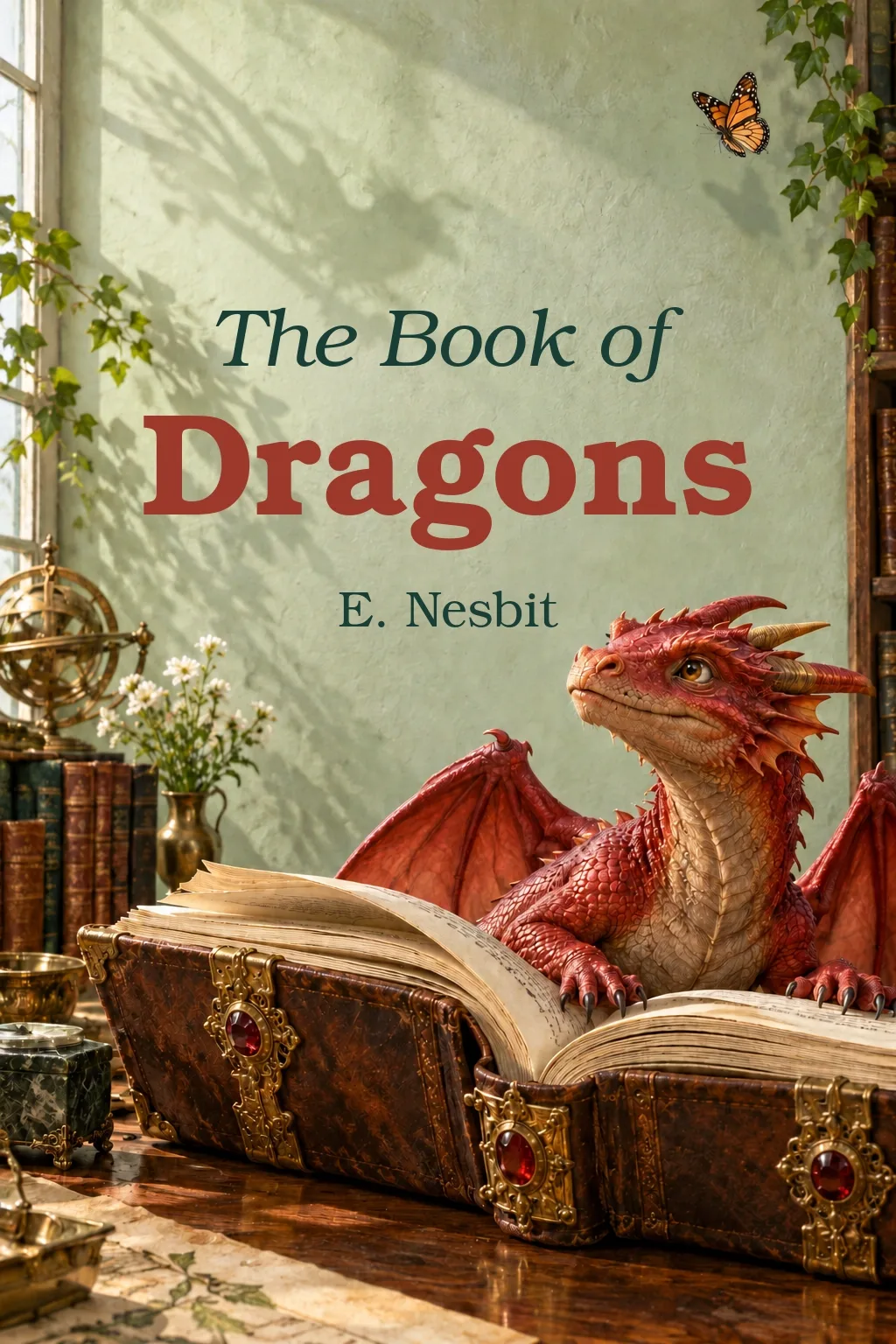
| author | E. Nesbit |
|---|---|
| genre | Children's fantasy; comic fairy tales |
| length | Eight stories; approximately 41,500 words |
| english level | B1–B2 |
Spoiler-free summary
The Book of Dragons is a collection rather than a continuous adventure. Each of its eight stories introduces a different situation, cast, and set of magical rules. A newly crowned boy discovers that the pictures in an inherited book can come alive. On the island of Rotundia, a purple visitor unsettles a society proud of being kind. Elsewhere, dragons multiply until ordinary English life has to reorganize itself around them.
The settings move between royal palaces, familiar homes, polar ice, a lonely sea tower, and a blacksmith's ruined castle. Some dragons are enemies; others can be customers, companions, or creatures with needs of their own. Their particular habits matter more than a general rule that all dragons must be slain. A small detail about food, sleep, temperature, or construction can become the centre of an adventure.
Nesbit places practical problems beside impossible events. Children still worry about lessons, grown-ups still give speeches, and households still need an income. The central movement of each tale is the attempt to understand the creature and act before the situation becomes worse. Readers can enjoy one complete story at a time without remembering a single developing plot across the whole collection.
Why it is worth reading
Nesbit makes magic interesting by giving it awkward practical consequences. In The Dragon Tamers, a terrifying encounter turns into a conversation about damaged rivets. The blacksmith recognizes a possible customer where another hero might see only an enemy. This shift changes both the scene's humour and the kind of intelligence the story rewards.
The narrator also keeps interrupting grandeur with familiar comparisons. Royal ceremonies sit beside nursery habits; dangerous creatures acquire the inconveniences of household pests. In The Deliverers of Their Country, the different sizes of dragons make the invasion troublesome in different ways, from an insect-sized irritation to a public emergency. The escalating catalogue is part of the storytelling pleasure.
Finally, the collection repeatedly changes its answer to the question of what a dragon is. A creature can embody appetite, threaten a kingdom, or fit into domestic life. Reading the stories together lets you notice these variations without needing a long invented history or a complicated fantasy system.
Main characters
There is no single main character across The Book of Dragons. Lionel, the young king in The Book of Beasts, begins with nursery experience rather than political wisdom. His nurse and ministers keep addressing him as a child even after he gains royal authority.
Tom, the gardener's boy in Uncle James, or The Purple Stranger, cares about Princess Mary Ann. Their affection contrasts with her uncle's polished language and private ambitions. Effie and Harry face a countrywide dragon problem, while George and Jane encounter danger after disobedience carries them into a strange icy world.
John the blacksmith brings a worker's knowledge to The Dragon Tamers. Sabrinetta and the pigkeeper Elfin appear in The Fiery Dragon, where personal generosity matters alongside social rank. Edmund, in the final story, asks questions and investigates things that other people would leave alone. These heroes share an ability to notice or attempt something that established authority overlooks, although their mistakes also create difficulties.
Themes
Authority is one recurring target of the collection's humour. Lionel's ministers fear the inherited books, while Edmund's schoolmaster treats an extraordinary report as an offence against classroom discipline. These scenes ask what happens when a confident adult response substitutes for examining the evidence. The stories do not simply declare every child right; instead, they make certainty look vulnerable when magic changes the circumstances.
Kindness also requires judgement. Rotundia's inhabitants assume that their friendly customs will make a dangerous visitor harmless. Uncle James can exploit the language of generosity because people are reluctant to question it. In contrast, John approaches the dragon's damaged wing through an actual practical need.
A further theme is the relationship between status and useful action. Crowns and official titles do not automatically supply the knowledge needed to solve a crisis. A gardener's boy, a blacksmith, or a pigkeeper can understand something essential. Nesbit repeatedly brings large fairy-tale questions down to particular actions: looking closely, listening, making a repair, or noticing how a creature behaves.
What it feels like to read
The stories move briskly, but their pleasures include pauses for lists, comparisons, and conversations. In The Deliverers of Their Country, the narrator expands the dragon emergency through a sequence of increasingly inconvenient examples. You are invited to imagine how an impossible event would affect a bath, a workbasket, or a council office.
The voice feels like an energetic storyteller speaking directly to listeners. It sometimes explains a point, sometimes teases, and sometimes pretends that an absurd conclusion is perfectly reasonable. The Island of the Nine Whirlpools has a more spacious fairy-tale atmosphere, with isolation and long waiting beside the collection's jokes.
Threats can be startling: dragons swallow people and institutions, and adults sometimes punish children harshly. The narration usually treats these events through comic exaggeration rather than detailed horror. Readers expecting consistently gentle bedtime scenes may nevertheless find some passages uncomfortable.
How hard the English is
B1–B2 is a useful editorial estimate for The Book of Dragons, with different demands at each level. A B1 learner can often follow the central action with dictionary help and illustrations. B2 readers are better placed to understand the narrator's irony independently. This is an assessment of the original English, not an official CEFR rating.
Vocabulary combines familiar domestic words with terms for royalty, trades, creatures, and older customs. In The Book of Beasts, words such as chancellor and hippogriff add difficulty even when the action is clear. Nesbit also invents or extends words for comic effect, so a missing dictionary entry does not always mean you have misunderstood.
Sentence structure varies. Short exchanges give clear steps in an encounter, but longer paragraphs accumulate qualifications and examples. Tracking who speaks is usually easier than deciding whether a polite statement is sincere. Uncle James's speeches especially require attention to the gap between his language and his intentions.
Historical context includes school punishments, servants, money, and public institutions. George and Jane's story also assumes familiarity with British celebrations and places. Not every reference is necessary for following their predicament.
Length is manageable in separate sittings: eight stories total roughly 41,500 words. Following one adventure is easier than catching every joke, comparison, or social implication. A learner can understand the outcome of a scene while still missing why the narrator's wording is funny.
Who should read it
The Book of Dragons suits readers who enjoy fairy tales with practical puzzles and a narrator who questions adult dignity. Someone drawn to the blacksmith's negotiation with a dragon may enjoy it more than someone looking for extended battles, a single quest, or detailed world-building. Its eight separate stories also suit readers who prefer a complete narrative in a shorter sitting.
For English learners, the collection offers repeated language about actions, movement, requests, and consequences. B1 readers will benefit from support for unfamiliar creature names and older expressions; B2 readers can pay more attention to the difference between what a character says and what the narrator implies.
Adults may find the council officials, ministers, and self-important teachers as interesting as the dragons. Younger readers may need an adult to discuss frightening episodes, corporal punishment, and the narrator's dated assumptions rather than taking every judgement at face value.
Frequently asked questions
Is The Book of Dragons one story or a collection?
The Book of Dragons contains eight separate stories, each with its own characters and magical situation. Lionel's enchanted book belongs to one adventure, while the blacksmith and the ice dragon belong to others. You can read the tales individually, although reading them together makes their different approaches to authority, kindness, and practical problem-solving easier to notice.
Is The Book of Dragons suitable for B1 English learners?
The Book of Dragons can suit B1 learners who use occasional dictionary help and other support, but independent understanding of its humour is closer to B2. The action and much of the dialogue are direct. Older vocabulary, extended comparisons, and the narrator's irony create a second layer of difficulty beyond understanding what happens.
Can adults enjoy The Book of Dragons?
Adults can enjoy The Book of Dragons for its comic treatment of authority and everyday institutions. The dragon invasion affects newspapers and local government as well as children, and the blacksmith's encounter becomes a matter of professional skill. Readers who like concise fairy tales and a teasing narrative voice need not approach the collection solely as children's entertainment.