Little Lord Fauntleroy: Summary and English Level
KeepReap Editorial
A seven-year-old New Yorker arrives at an English castle convinced that his fearsome grandfather must be a wonderfully generous man. That misunderstanding drives Little Lord Fauntleroy: Cedric does not know how unkind the Earl can be, and the Earl does not know what to do with such unguarded affection. Frances Hodgson Burnett turns an inheritance story into a study of the pressure kindness can place on pride.
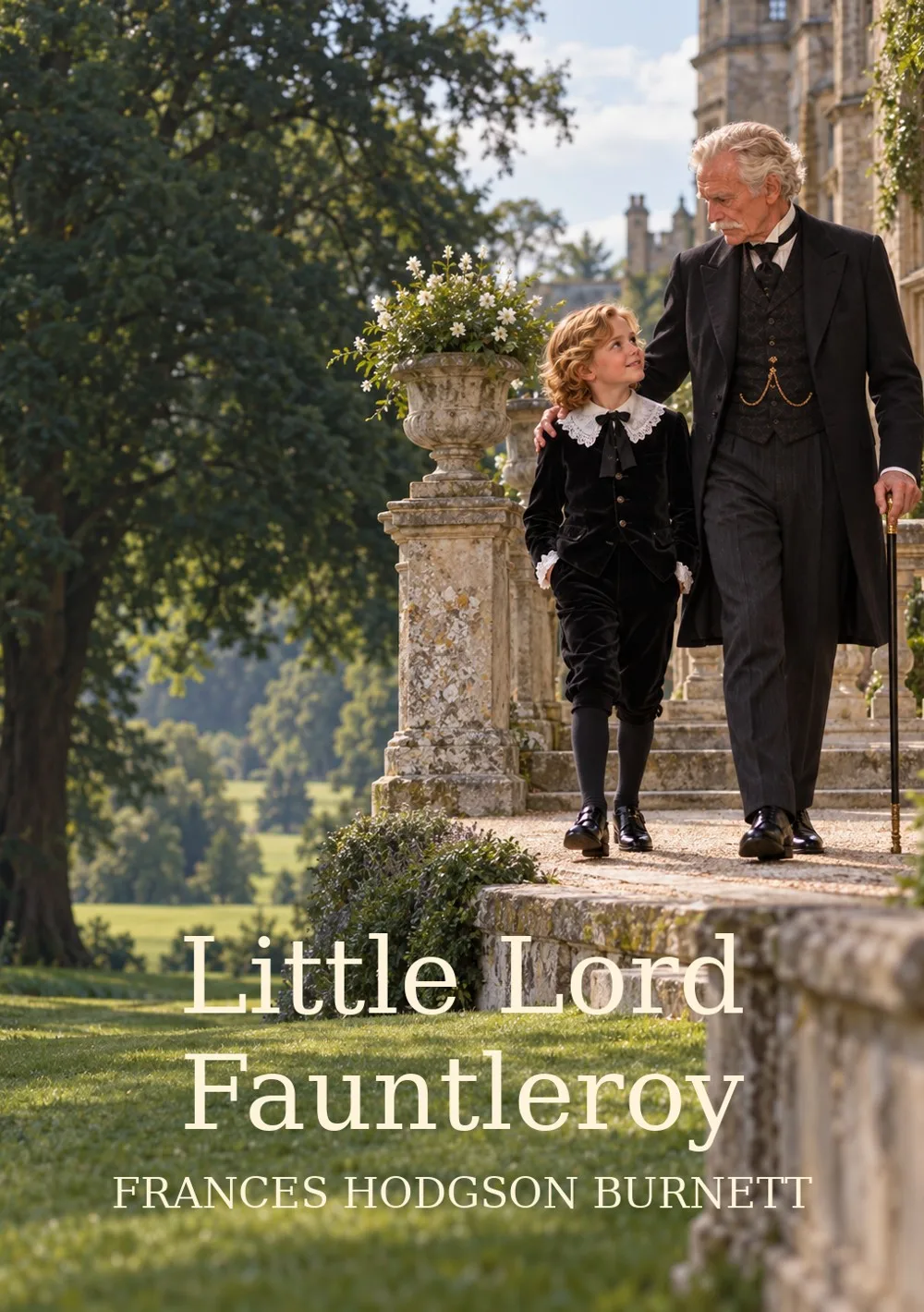
Little Lord Fauntleroy at a glance
| author | Frances Hodgson Burnett |
|---|---|
| first published | 1886 |
| genre | Children's novel; family and social fiction |
| length | 15 chapters |
| english level | B2 |
Spoiler-free summary
Little Lord Fauntleroy begins in New York, where Cedric Errol lives with his widowed mother. Their circumstances are modest, but his world is rich in relationships: he enjoys talking with Mr. Hobbs, the grocer, and Dick, a boy who earns his living polishing boots. Cedric's trust in people grows from these ordinary friendships and from his mother's example.
A visit from the lawyer Mr. Havisham changes his future. Cedric is heir to his English grandfather, the Earl of Dorincourt, and must cross the Atlantic to take his place in the family. His mother accompanies him, but the Earl's hostility toward her means that mother and son will live in separate houses. Cedric encounters grandeur without understanding the resentment beneath it.
The central pleasure is watching the child speak freely to an adult whom everyone else approaches cautiously. Cedric assumes that wealth exists to help people, and his requests bring that assumption into the castle. Meanwhile, questions about inheritance introduce uncertainty into his new position. The novel combines affectionate domestic scenes, social comedy, and a later challenge to the security that the title seems to promise.
Why it is worth reading
Burnett makes dramatic irony unusually accessible. When Cedric thanks his grandfather for being kind, readers know that the Earl's reputation is very different. The gap between the boy's belief and the adult's conduct creates both comedy and pressure: the Earl has to hear himself described as someone he has rarely tried to be. Small exchanges become events because each speaker understands them differently.
The movement between New York and Dorincourt also gives the friendships substance. Mr. Hobbs's shop and Dick's work are not simply discarded when Cedric enters the castle. Their presence challenges the idea that noble rank should decide whose company matters. The novel's early success also extended beyond reading: the ASU FIDM Museum documents how Cedric's velvet costume became a fashion influence, especially after its stage adaptation. His appearance became famous, but his disregard for social distance remains the more interesting reason to follow him through the story.
Main characters
Cedric Errol is seven when the inheritance changes his life. His generosity is direct and practical: he thinks about what money could do for people he already knows. He is unusually good, but his misunderstandings, questions, and borrowed adult expressions keep him active in conversations.
The Earl of Dorincourt is his proud, ill-tempered grandfather. His authority makes other adults cautious; Cedric's affection unsettles that familiar arrangement. Mrs. Errol, whom Cedric calls Dearest, provides the habits of care and fairness that he carries into the castle. Her dignity matters even while the Earl excludes her.
Mr. Havisham handles the family's legal affairs and watches the boy with growing interest. Mr. Hobbs supplies blunt American opinions about aristocrats, while Dick offers streetwise loyalty. Mr. Mordaunt, the parish rector, connects the castle's power with the needs of its tenants, giving Cedric's generosity a setting beyond family life.
Themes
Kindness in Little Lord Fauntleroy works through repeated actions rather than abstract speeches alone. Cedric remembers an apple given when he hurt his knee and imagines shelter for the woman who sells fruit. Later, his concern for the tenant Higgins brings a family's distress into the Earl's comfortable room. These scenes connect feeling to the use of resources.
The distinction between rank and character runs through Cedric's friendships. His attachment to a grocer and a bootblack survives his change of status, while the Earl possesses a distinguished title without an equally generous reputation. The book asks what nobility should mean when a child takes its moral associations seriously.
Family pride is another recurring force. The Earl's hostility to Cedric's mother exposes how national prejudice and injured authority can obstruct affection. Yet the novel's social outlook has limits: it imagines better treatment through personal influence within the estate system. Readers can appreciate Cedric's challenge to snobbery while noticing that inherited wealth itself remains central to the world Burnett presents.
What it feels like to read
The opening chapters take time over Cedric's conversations and his New York friendships. Their pace lets readers understand the habits he brings to England. Once he reaches Dorincourt, meetings in the library, rides on his pony, and encounters with villagers build the relationship with his grandfather through accumulated small moments.
The tone is openly sentimental. The narrator frequently praises Cedric's beauty and goodness, and emotionally important passages linger over adult reactions. Readers who enjoy warm family fiction may find this satisfying; readers who prefer understated characterization may find some repetitions excessive.
Humor prevents the mood from becoming solemn throughout. Mr. Hobbs's opinions, Cedric's explanations of aristocratic life, and the Earl's dry responses provide different voices. The later inheritance complication adds a sharper sense of uncertainty to the domestic rhythm.
How hard the English is
B2 is a reasonable editorial estimate for independent reading of the original Little Lord Fauntleroy, rather than an official CEFR rating. The main action is easier to follow than every nuance of its language. Cedric's wishes are usually concrete, and repeated settings help readers maintain their bearings, but confident interpretation requires attention to how adults react beneath their spoken words.
Vocabulary combines familiar family language with historical terms such as earldom, tenantry, livery, and gout. Learning a small set of words about rank and estate life pays off repeatedly. Sentence structure is less uniform: direct exchanges may be short, while the narrator's descriptions and explanations often extend through several clauses.
Dialogue is the most uneven difficulty. Cedric speaks relatively clearly, but Dick, Mr. Hobbs, and the servants use slang or spellings that represent pronunciation. Dick's letters add unconventional spelling. Reading these passages aloud can reveal familiar words, though a dictionary may not recognize their printed forms.
Cultural context also matters: inheritance, titles, servants, and the landlord's authority explain many interactions. Across fifteen chapters, recurring praise and long descriptive passages require reading stamina. A B1 learner could follow much of the plot with notes, illustrations, and dictionary support, but that differs from understanding dialect, social irony, and historical language independently.
Who should read it
Little Lord Fauntleroy suits readers interested in relationships across generations, social differences, and the effect a child's assumptions can have on adults. The library conversations are especially rewarding if you enjoy noticing what one character understands and another misses. Adults can also consider the estate's hierarchy and the tensions beneath the narrator's affection for Cedric.
English learners around B2 who want to attempt an original Victorian children's novel have useful support in its clear central relationship and recurring situations. Less confident readers will benefit from a character list and explanations of titles before starting. The book may be a poor match for someone seeking rapid action, moral ambiguity in the child protagonist, or consistently modern conversational English. Its sentimental descriptions and dialect passages are substantial parts of the experience.
Frequently asked questions
What is Little Lord Fauntleroy about?
Little Lord Fauntleroy follows Cedric Errol, a young American boy summoned to England as heir to his grandfather, the Earl of Dorincourt. The main relationship pairs Cedric's trusting kindness with the Earl's pride and bad temper. Family resentment, friendships across social classes, and uncertainty about inheritance shape the story without replacing that central emotional conflict.
Is the original Little Lord Fauntleroy easy to read in English?
The original Little Lord Fauntleroy is best approached around B2 for independent reading, as an editorial estimate. Its main events are fairly clear, but Victorian sentence patterns, words about aristocratic life, and dialect spellings add difficulty. B1 learners may follow the plot with support while still needing explanations for slang, irony, and the adults' indirect reactions.
Can adults enjoy Little Lord Fauntleroy?
Adults can enjoy Little Lord Fauntleroy for its social comedy and the Earl's uncomfortable encounters with Cedric's moral confidence. Library of America's interview with Burnett scholar Gretchen Holbrook Gerzina also places the novel within her wider appeal to adult readers. Its sentimentality is pronounced, so enjoyment will depend partly on how you respond to an idealized child protagonist.